


Download the app by clicking the link below :


Few sporting events can claim to have changed the language. The Derby can.
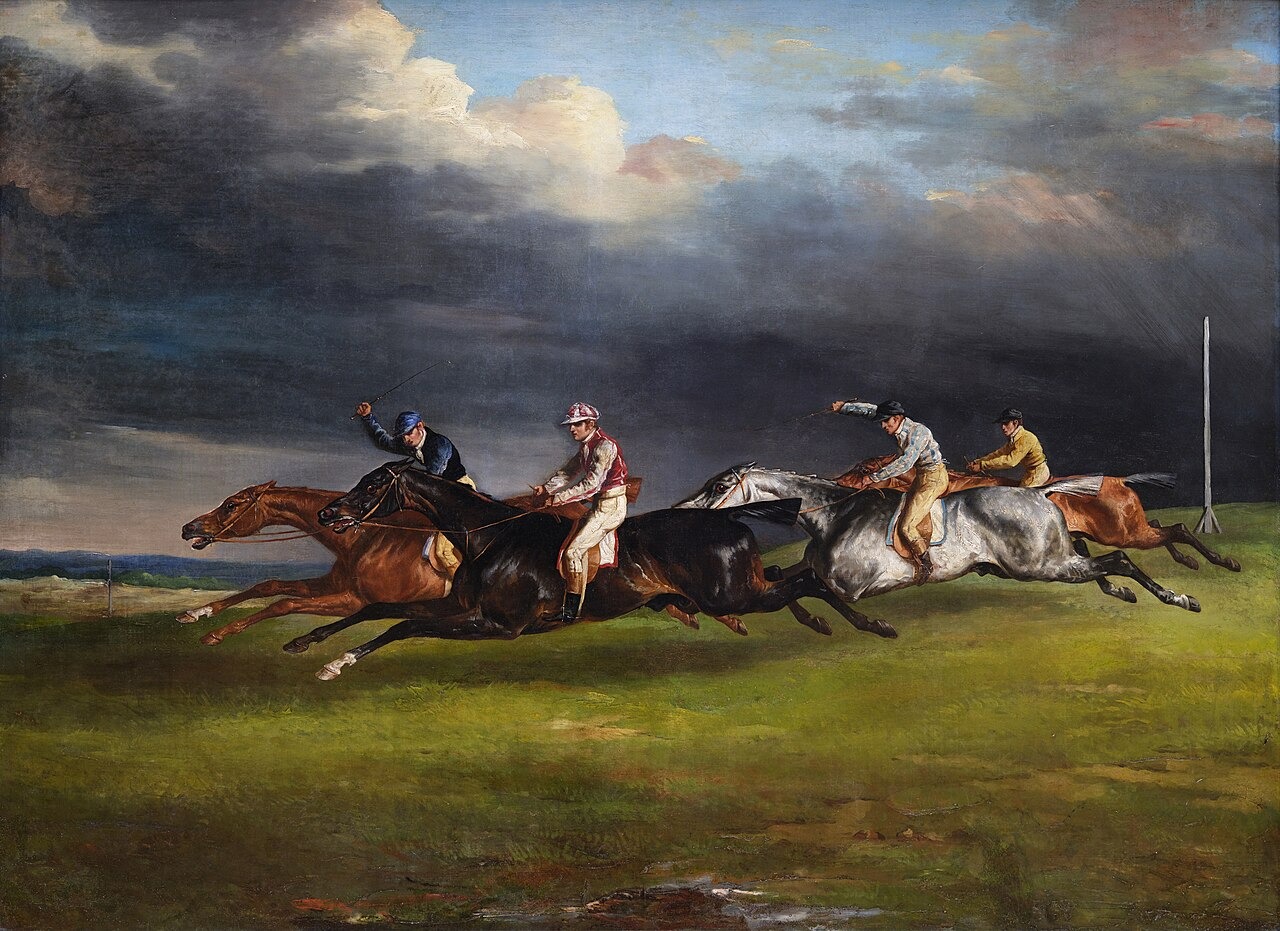
Today, the word “derby” is used across the sporting world to describe the biggest rivalries and occasions. Football has the Merseyside Derby, the North London Derby and countless others. In racing, nations from America to Japan have created their own versions. Yet every one of them traces its lineage back to a stretch of Surrey turf and a race first run at Epsom in 1780.
More than two centuries later, the Derby remains the race by which great three-year-olds are judged. It is not just Britain’s premier Classic. It is the blueprint for virtually every major middle-distance race that followed.
The origins of the race are almost as famous as the race itself. Following the success of the Oaks, a race for fillies first run in 1779, a gathering took place at the home of Edward Smith-Stanley, the 12th Earl of Derby. A new race for three-year-olds was proposed. Legend has it that the name was decided by a coin toss between Lord Derby and Sir Charles Bunbury, one of the most influential racing figures of the age. Derby won the toss and racing history was made. Had the coin landed differently, the sporting world might today be talking about the “Bunbury”.
Whether the coin toss happened exactly as folklore suggests hardly matters. The story has become part of the race’s mythology, helping to explain why the Derby has always felt bigger than a horse race. It is a cultural institution.
The first running took place on 4 May 1780 and was won by Diomed, owned by Sir Charles Bunbury. Ironically, the man who supposedly lost the naming rights won the race itself.
As the nineteenth century progressed, the Derby grew into the most important race in Britain. Derby Day became a national event. Vast crowds travelled to Epsom. Parliament was known to arrange its business around the race. Artists painted it, novelists wrote about it and newspapers devoted enormous coverage to it. Long before modern sport understood mass appeal, the Derby had become a national spectacle.
Its influence soon spread far beyond Britain. The Irish Derby, the French Derby, the Deutsches Derby, the Kentucky Derby, the Australian Derby and the Japanese Derby all owe their existence directly to Epsom. The Derby became racing’s most successful export. In time, its name escaped racing altogether and entered everyday sporting vocabulary as shorthand for a contest of exceptional significance.
Yet the Derby’s greatest impact may have been on the Thoroughbred itself.
The race became the ultimate examination of speed, stamina, balance and temperament. Winning it elevated a colt from racehorse to potential breed-shaper. Generations of breeders used Derby winners as stallions, hoping to pass on the qualities needed to succeed around Epsom’s unique contours.
Some winners left a profound mark on the breed.
Sir Peter Teazle, winner of the 1787 Derby, became one of the dominant stallions of his era and helped shape the early development of the Thoroughbred. Waxy, the 1793 winner, emerged as another hugely influential sire, extending the bloodlines that would define nineteenth-century racing.
In the modern era, few Derby winners have had a greater impact than Galileo. His victory in 2001 was only the beginning. At stud he became one of the most important stallions in racing history, producing generations of elite performers, notably the mighty Frankel, and establishing a dynasty that continues to dominate pedigrees around the world.
That ability to identify future stallions is one reason the Derby remains so important. It is not simply a race that crowns a champion. It often determines the direction of the breed itself.
The race has also produced some of racing’s most memorable champions. Nijinsky on his way to completing the Triple Crown in 1970. Shergar’s ten-length demolition in 1981 remains one of the most dominant performances ever seen. Sea The Stars used the Derby as a stepping stone to one of the greatest campaigns in modern racing.
Every generation seems to produce another Derby horse capable of capturing the public imagination.
That is perhaps the race’s greatest achievement. The Derby has survived social change, world wars, economic upheaval and dramatic shifts in the sport itself. Through it all, it has retained a unique place in British life.
Many races are prestigious. Many races are historic. Only one race gave its name to the sporting world.
That is the Derby’s legacy.

Download the app by clicking the link below :


